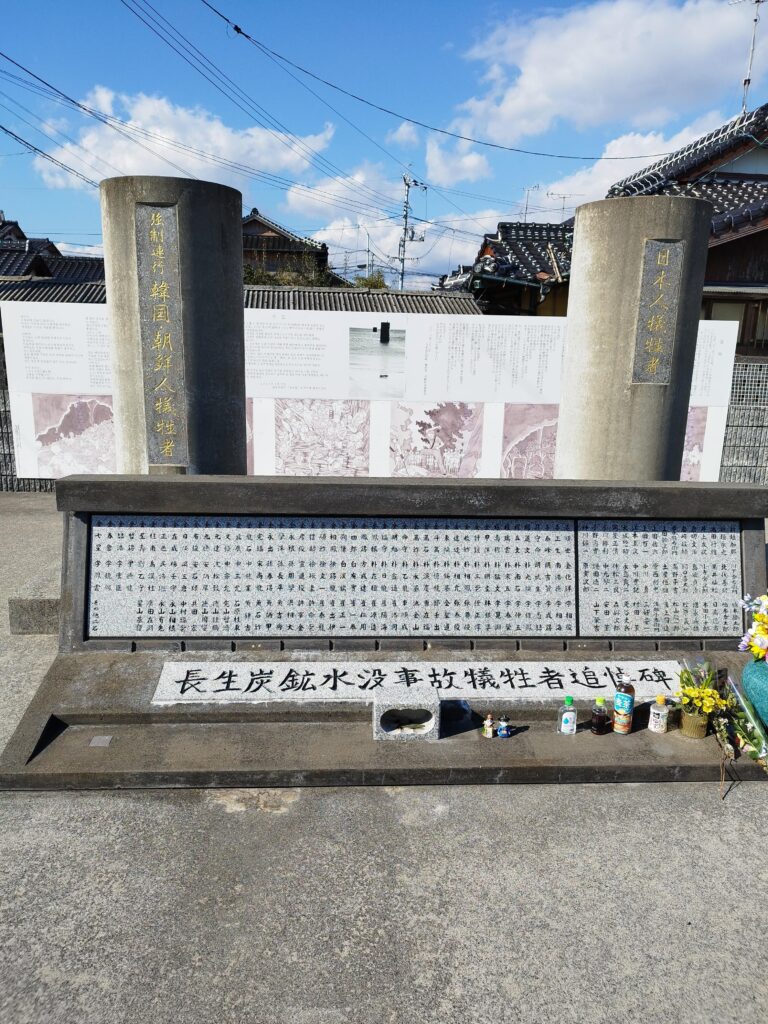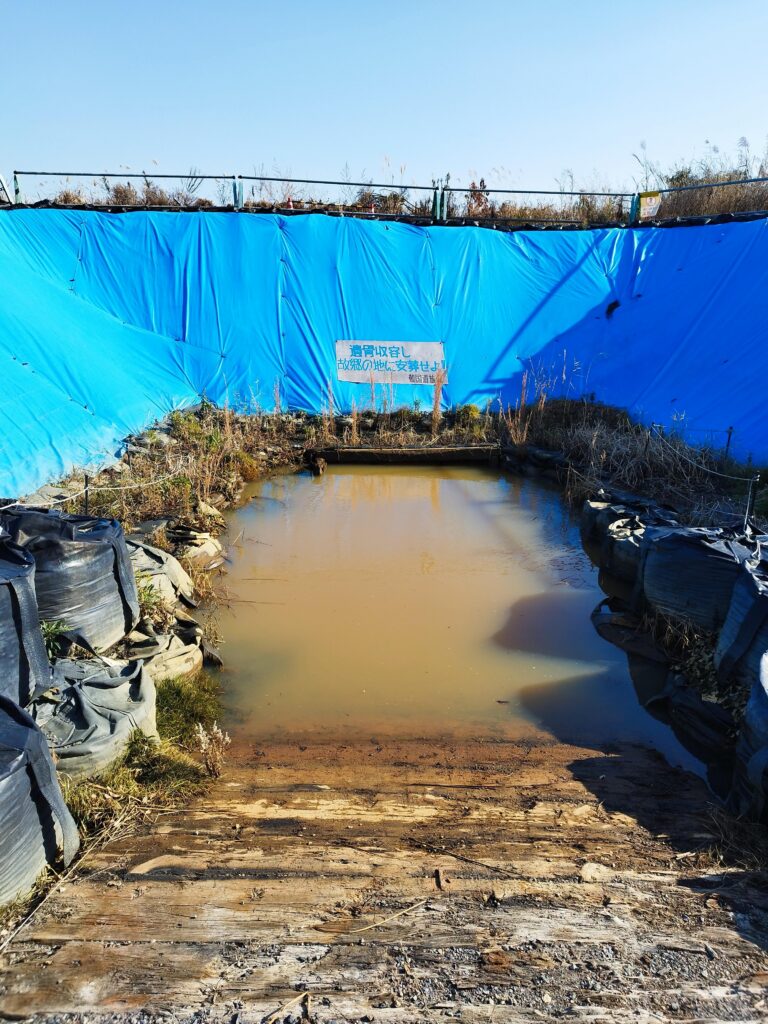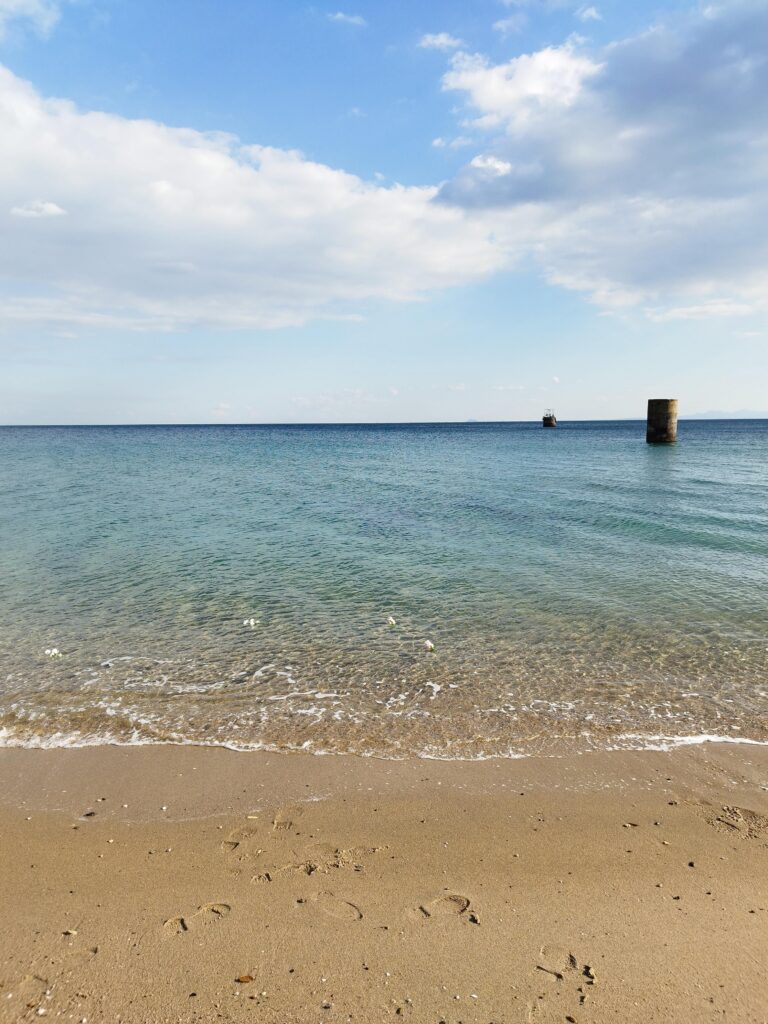
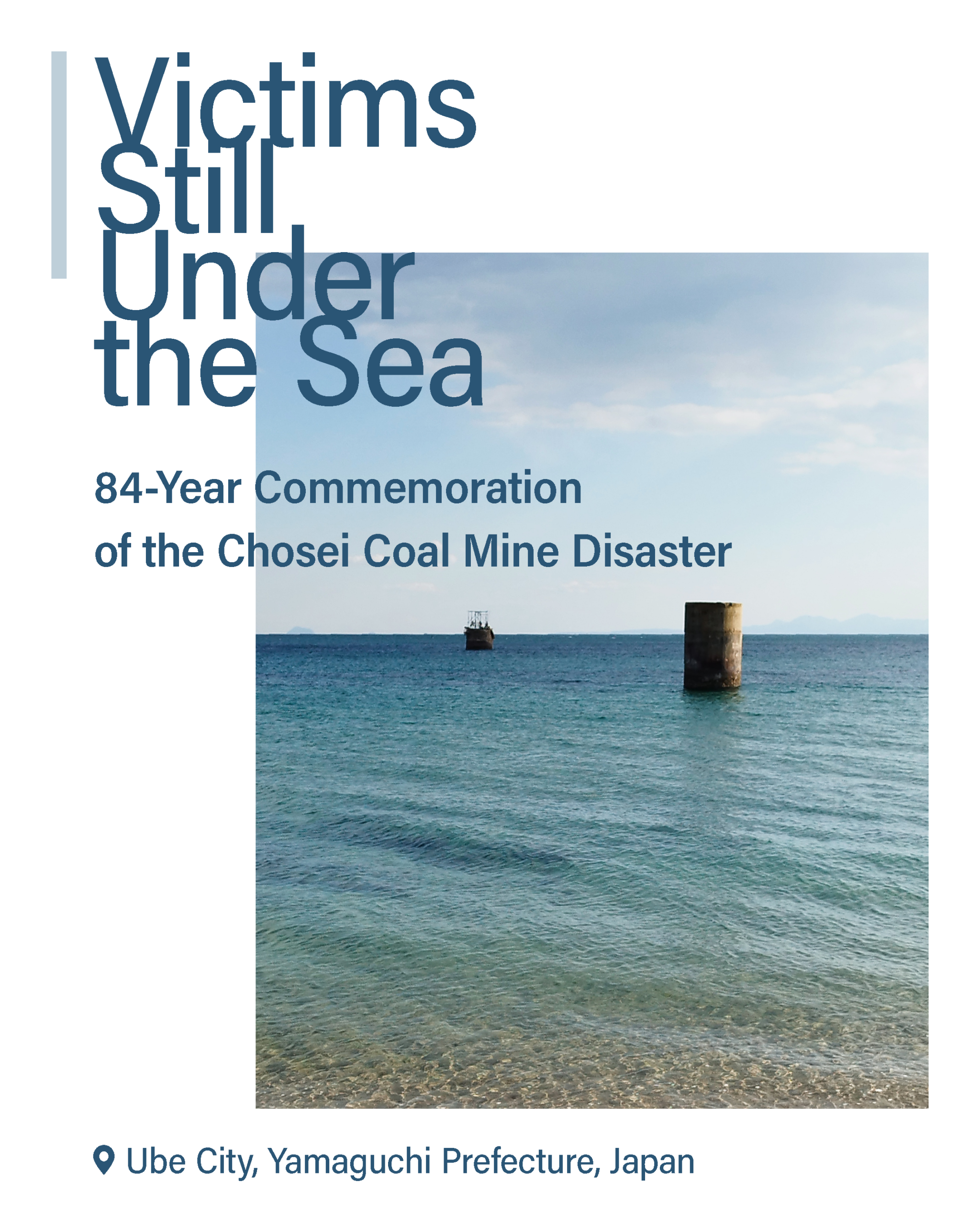
84 years ago, on February 3, 1942, a severe mining disaster occurred at the Chōsei Coal Mine in Ube City, Yamaguchi Prefecture, Japan, killing 183 workers. Eighty percent of the victims were Koreans living under Japanese colonial rule. As Japan heavily exploited Korea, many people migrated to Japan for survival and were also forcibly mobilized to serve the wartime economy. The catastrophe happened shortly after Japan entered war with the USA, during the later stages of the Asia‑Pacific War. On the day of the disaster, the mine company had to deliver a quota of coal to the military. Under intense pressure, working conditions were extremely poor, and the mining operation continued even ignoring the safety standards of the time, ultimately leading to the tragedy. Immediately after the collapse, seawater flooded the tunnels. Although people remained trapped, the entrance was blocked with wooden boards on the boss’s orders. Discussing the disaster soon became taboo. Bodies were never recovered, the catastrophe was never investigated, and no compensation was provided. For many years after the war, the matter remained unresolved.
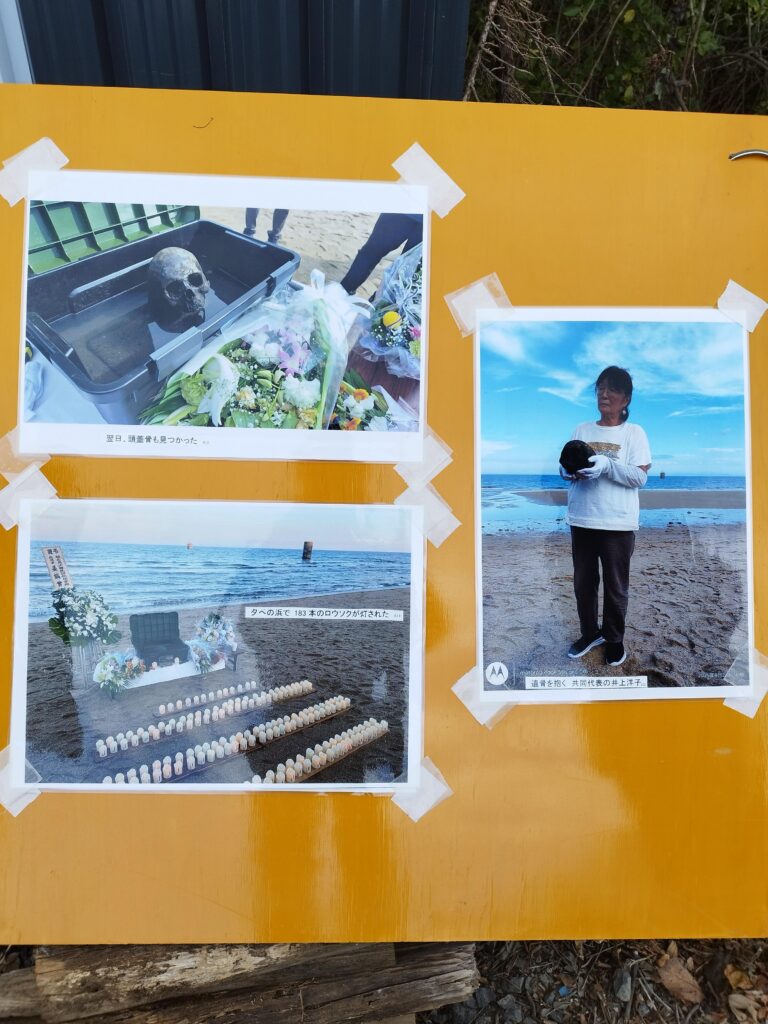
Starting in 1991, a local activist group the Association for Commemorating the Chōsei Coal Mine Flooding Disaster began investigation. As the Japanese government did nothing, they took the initiative to investigate, contacting relatives of the victims in Korea. With the support of citizens and tremendous effort, they finally began recovering remains last year. This February, the annual memorial gathering is scheduled, along with a large‑scale recovery operation. The mission is led by expert diver Isaji‑san from Okinawa and assisted by divers from around the world. As the crises of war and racism intensify in Japan, it is more important than ever to remember a history of colonialism that has not yet been fully addressed. We express our sincere solidarity with this grassroots effort and demand that the Japanese government investigate the truth, assume responsibility, and memorialize this history as a perpetrator country.
84年前の1942年2月3日、山口県宇部市の長生炭鉱で水没事故が発生し、183名の労働者が亡くなった。犠牲者の8割は日帝植民地統治下の朝鮮の人々であり、収奪下で日本での就労を余儀なくされ、また強制連行されてきた人々であった。日米開戦下、アジア太平洋戦争後期の状況下で、その日は炭鉱が軍への供出を義務付けられていた日であった。劣悪な労働環境下、当時の安全基準すら無視した採掘が強行されていたことこそが事故の原因であった。事故直後、海水が流入するなか、まだ坑道に残っている人々がいたにもかかわらず責任者の命令により、入口は板でふさがれた。事故について語ることはタブーとなり、遺体収容はおろか、真相究明も補償も行われないまま戦後長い年月が経過した。本来なら日本政府が行うべき調査を、1991年から現地の運動団体「長生炭鉱の”水非常”を歴史に刻む会」が開始し、朝鮮半島の遺族と連絡をとりつつ市民の支援と膨大な努力の結果、昨年はじめて遺骨収容が行われるに至った。今年2月は以前から海中作業を指揮してきた沖縄のダイバーの伊左治さんに加え、世界各地からのダイバーが集結しさらに大規模な遺骨収容と追悼集会が予定されている。戦争・排外主義の危機がふたたび迫っているなかで、いまだ過ぎ去っていない植民地主義の負の歴史を記憶することはこれまでになく重要だ。私たちはこの草の根の取り組みに心からの連帯を表明するとともに、日本政府による真相究明、責任追及、加害の歴史の記憶を要求する。
「長生炭鉱の水非常を歴史に刻む会」ウェブサイト
https://www.chouseitankou.com/
(February 10, 2026)
We extend our deepest condolences for the passing of Mr. Wei Hsu (Victor), a diver from Taiwan, who passed away on February 7, 2026 during the diving survey. We continue to support the effort led by the Association for Commemorating the Chōsei Coal Mine Flooding Disaster.
追記(2026年2月10日)
2026年2月7日の潜水調査中に台湾からのダイバー、ウェイ・スーさんが亡くなられたことに心からのお悔やみを申し上げます。引き続き「刻む会」の活動への注目・支援を呼びかけます。